Showing posts with label flow through tax shares. Show all posts

Sunday, February 07, 2016

2016 Could Be a Big Year for Space: Is Ottawa Paying Attention?

          By Glen Strom

Is the space business really growing? A group called Space Angels Network says it is.

A December 3rd, 2013 BBC News panel discussion on investing profitably in NewSpace start-ups with Virgin Galactic founder and chairman Richard Branson (on the left, connecting "via satellite") and Space Angels Network managing director Chad Anderson (right). Not shown in the photo was Satellite Applications Catapult CEO Stuart Martin, who also participated in the discussion. To see the entire interview, please click on this link. It's also worth noting that, as outlined in the December 14th, 2015 post, "UK Space Policy Follows US Down the "NewSpace" Path," both the UK and the US have implemented public policy designed to encourage large increases in private sector space activities. These new policies are creating a business environment in which Canadian companies cannot currently compete. Screenshot c/o Space Angels Network.

The organization describes itself this way:
Space Angels Network is a global network for angel investors, offering insider access to the emerging private space industry and sophisticated investment opportunities across diverse market segments, with the expertise and network connections to cultivate stellar returns on investment. We are the largest community of space investors and entrepreneurs in the world.
A January 21, 2016 article at their website, “2015 An Epic Year for the Space Industry,” makes the case that 2015 was a big year for space activities and 2016 will be even better.

The first half of the article is a summary of the events that took place in space in 2015. It’s the second half of the article, starting with the heading, “Record Levels of Investment,” that’s of real interest.

According to the Space Angels website, the network has funded 29 companies during its eight years of existence. These include Astrobotics (presently contracting for private sector Moon missions), Nanoracks (which places small science experiments on board the International Space Station), Planetary Resources (focused on outer space resource gathering) Ursa Space Systems (geospatial imagery) and XCOR Aerospace (currently building the Lynx rocket plane). Co-funders and sponsors include venture capital firms Draper Fisher Jurvetson, Founders Fund, Data Collective (focused around funding data scientists) and First Round Capital. Graphic c/o Space Angels Network.

Here’s a summary of what that part of the article says:
  • The compound annual growth rate (CAGR) for commercial space activities between 2012-2015 was 180%.
  • In the last 10 years over $20Bln USD of non-governmental money has been invested in commercial space companies.
  • In 2015 the level of non-governmental investing in commercial space was $3.3Bln USD, with most of it coming from corporations. A majority of this money went to launch systems and satellites.
  • Acquisitions of space assets in 2015 totaled nearly $4Bln USD.
A July 24, 2015 post, “Space Economy Now $330Bln US Annually, Says Report,” examines the numbers in a report from the Space Foundation, a US based non-profit organization that advocates for the global space industry. They agree that a breakthrough year is likely. The data in the report on European space activities comes from Eurospace, the trade association of the European space industry, which also thinks that way.

The 2015 State of the Satellite Industry Report, a 32-page PDF document produced by the Satellite Industry Association (SIA), shows that the satellite communications area has the most potential in the near term. That’s an area where Canada does well.

Canada’s federal government has made a big deal about promoting technology. When it comes to space, though, so far the only announcement was about Neptec Design Group getting $1.7Mln CDN to design a damage detection system for the International Space Station. This contract had already been announced in November 2015, as outlined in the January 10th, 2016 post “Innovation Minister's Latest Announcement a Rehash of November 2015 Announcement.”

As outlined in the February 5th, 2016 Business Insider post, "A tiny European country just made an unprecedented move in the space mining business," crazy American based entrepreneurs aren't the only ones making large bets on the future of the space industry. As outlined in the article, the tiny country with a well deserved reputation as a tax haven, has followed down the same path as the US  by securing property rights for commercial companies intending to utilize rare and precious resources from asteroids. For some background on the US initiative and why Canada should also follow down this legislative path, it's worth checking out the November 26th, 2015 post, "Say Hello to the New US Commercial Space Launch Competitiveness Act." Screenshot c/o Business Insider.

Commercial space is picking up speed. What should the Canadian government be doing to get us a piece of that action?

If you’re about to say create more projects for space companies, forget it. Canada’s economy is slow, the dollar is down and the government will likely run deficits for a few years. It’s unlikely that they’ll put a lot more money into government space projects.

Here’s what they can do:
  • Stabilize the Canadian Space Agency (CSA). As recommended by Emerson, give it a clear mandate and the funding it needs to carry out that mandate.
  • Create an environment that helps space companies grow through initiatives like tax breaks and access to financing. 
  • Promote the Canadian space industry internationally. The government has been promoting Canadian technology, as Prime Minister Justin Trudeau did at the recent 2016 World Economic Forum (WEF), but more focus on space is needed.
  • Create an environment where more young Canadians can get their space dreams off the ground while they’re still in university. Some schools, the University of Waterloo in Ontario (most recently profiled in the September 4th, 2015 post "What Waterloo Engineering Dean Pearl Sullivan Really, Really Wants!") being one example, are doing well at this on their own, but promoting entrepreneurship needs to be done at a national level.
Glen Strom.
If the growth trend in 2015 continues, 2016 will be a strong year for commercial space. Let’s hope the Canadian government is paying attention and puts some effort into promoting our space industry.

Commercial space is the future and we need to carve out our place in it.
_____________________________________________________

Glen Strom is a freelance writer and editor with a background in business and technical writing. Follow him on Twitter @stromspace for the latest on Canadian space stories.

Monday, March 11, 2013

A Quick Overview of CSCA 2013 Media Coverage


Public feedback from the 6th national conference organized by the Canadian Space Commerce Association (CSCA 2013), which was held on Thursday March 7th in Toronto, ON and focused on commercial space resource utilization, has been generally positive, at least if you concentrate on the mass media articles and stories covering the event.

Listed below are a few of the more noteworthy examples:
    Dale Boucher.
  • According to the March 7th, 2013 Toronto Star article “Mining for gold in deep space,” the topic "sounds like the stuff of science fiction, but in fact, it’s already here says a growing list of mining and aerospace companies." The article went on to quote Dale Boucher, the director of product design, prototyping and testing at the Northern Centre of Advanced Technologies (NORCAT), a Sudbury-based training and technology development centre for the mining industry, as stating that, "Canada can take a leaders’ role (in this new area) by adapting existing mining legislation to include places like asteroids and the moon. That would require international agreements, but Canada can certainly take a leading role."
Bob Richards.
  • The March 7th, 2013 Globe and Mail article “Tech titans crucial to the next wave of space exploration" traced the genesis of the asteroid mining concept back to the 1970's and Gerald K. O'Neil, who argued that private enterprise was the key "to extending humanity's presence beyond Earth." The article also quoted Silicon Valley entrepreneur Bob Richards, who left Canada in 2009 because of the then common perception that the Canadian space industry focused primarily on procuring government contracts. According to Richards, the present interest in asteroid mining is simply "the expansion of the economic sphere outward to where the resources are."
Arny Sokoloff.
  • The March 8th, 2013 Canadian Press article “Space: the final frontier for extra-terrestrial miners,” focused on how space mining could "become the dominant industry in the future." The article quoted CSCA President Arny Sokoloff, who noted that extra-terrestrial mining was mentioned in the recent Federal government Aerospace Review. According to Sokoloff, the government should encourage the industry, “in the very least,” by giving space companies some of the same tax benefits that Canadian mining companies currently receive. The article also quoted Gordon Osinski, the NSERC/MDA/CSA industrial research chair in planetary geology at the University of Western Ontario who said that “if those in government are watching things around the world and paying attention, this really is a potential niche area for Canada (to) take the lead."
For those who'd like to learn more, the March 11th, 2013 SpaceRef.ca article “Prospecting the Solar System” included complete videos from many of the presentations and more are available on the SpaceRef Commercial Space Resource Utilization channel on YouTube.

In the interests of full disclosure, it's also worth noting that both SpaceRef and the Commercial Space blog acted as media sponsors for the event.

Tuesday, January 22, 2013

Deep Space Industries at CSCA National Conference in Toronto on March 7th


Rick Tumlinson.
Commercial space advocate Rick Tumlinson, the chairman of Deep Space Industries Inc. and considered to be one of the 100 most influential people in the space industry by Space News, will be speaking at the upcoming Canadian Space Commerce Association (CSCA) National Conference, being held in Toronto, ON on March 7th, 2013.

Tumlinson will provide an overview of this new company, the “FireFly” spacecraft which will perform the search and the 3D printing system (called the "MicroGravity Foundry") which will use nickel to create "high-density high-strength metal components even in zero gravity."

As outlined in the January 22nd, 2013 PRWeb press release "Commercial Asteroid Hunters announce plans for new Robotic Exploration Fleet," Deep Space Industries has announced that it will send a fleet of asteroid-prospecting spacecraft out into the solar system to hunt for resources to accelerate space development to benefit Earth.

The CSCA conference, focused on commercial space resource utilization, and taking place just one day after the 2013 Prospectors and Developers Association of Canada Annual Conference (PDAC 2013) in Toronto, will also include presentations from:
Ram Jakhu.
  • Ram S. Jakhu - As an associate professor of space law at the McGill Institute of Air and Space Law, Dr. Jakhu teaches and conducts research in international space law, the law of space applications, the law of space commercialization, the government regulation of space activities, the law of telecommunications and Canadian communications law, and public international law. Since 2009, he has also acted as an advisor on Optional Rules for Arbitration of Disputes Relating to Outer Space within the Permanent Court of Arbitration in The Hague.
Lana Paton.
  • Lana Paton - A partner in the tax services practice of PricewaterhouseCoopers LLP. With a broad range of experience providing tax advice to mining companies and multinationals including knowledge on Canada's Mineral Exploration Tax Credit (commonly called the "super" flow through program) and the Canadian Exploration Expense (CEE), Ms. Paten develops detailed and highly successful tax plans for her clients whether they work in a terrestrial or an extraterrestrial environment.
Nicole Verkindt
  • Nicole Verkindt - The CEO of Toronto based OMX Marketplace, an online database set up to provide government contractors with Canadian suppliers able to fulfill Industrial and Regional Benefit (IRB) program obligations. Ms. Verkindt, will discuss the over $20 billion dollars still remaining to be fulfilled under the program and add some insight on how Canadian mining, manufacturing, aerospace and space firms can access it.
Peter Visscher.
  • Peter Visscher - The space and robotics manager for Ontario Drive and Gear (ODG). With the expertise his firm has developed building the Canadian Artemis Jr. lunar rover to meet the requirements of NASA's Regolith & Environment Science and Oxygen & Lunar Volatile Extraction (RESOLVE) project, expected to hunt for water, ice and other lunar resources, Mr. Visser will talk about the hardware available in Canada today which can contribute to commercial space resource utilization.
Topics and other speakers will be announced over the next few weeks. As well, a late afternoon panel discussion, focused on “After Emerson and after Steve MacLean: Canada’s Space Future for the CSA and the Domestic Space Industry” will also take place.

For more information or to register, please go to the CSCA website

Saturday, April 07, 2012

Do Current Laws Support Private Space Activities?


Rand Simberg.
According to US based space expert Rand Simberg, the real reason we've remained trapped in low Earth orbit since the 1970's is a series of international treaties defining property ownership of outer space resources, which were designed specifically to make space "of sufficiently low value—either militarily or economically—as to remove the incentives for racing to get there."

As described in the April 2nd posting titled "Homesteading the Final Frontier" on the Competitive Enterprise Institute website, Simberg (who is listed as an "adjunct scholar" for the institute) mentions both the Treaty on Principles Governing the Activities of States in the Exploration and Use of Outer Space including the Moon and other Celestial Bodies (also known as the 1967 Outer Space Treaty) and the Agreement Governing the Activities of States on the Moon and Other Celestial Bodies (also known as the 1979 Moon Treaty) as being intentionally structured to make it "difficult to raise funds for extraterrestrial ventures, despite the abundant resources on the Moon and on asteroids, including metals with high value on Earth."


According to Simberg, the real solution to space access is a question of legislation and not of technology. Even better, only two pieces of legislation need to be directly dealt with:
  • First of all, the 1967 Outer Space Treaty needs to be formally re-interpreted as only prohibiting declarations of national sovereignty and not as prohibiting private property in outer space. This is already a reasonable and common (although not universal) interpretation of the treaty as outlined in my February 5th, 2010 post "Feedback on 'The Men Who've Sold the Moon.'"
  • Secondly, a new federal law (instead of an international treaty) needs to be passed to provide national recognition of land and property claims off planet under specified conditions relating to access and utilization. This would allow the land to be used as loan collateral or as an asset to be sold to raise the funds needed for development in much the same way that funds are currently raised for mining exploration. The specifics of the land claims process could even be taken from the existing mining legislation as it covers land claims.
Although this new law would explicitly contradict the 1979 Moon Treaty, Simberg reminds us that only thirteen states have ratified it (and not one is a major space-faring power) so it therefore has little relevance to current space activities.

This is, of course, not the first time that legislation traditionally associated with the mining industry has been perceived of as being a suitable legal framework for outer space activities. As outlined in my June 20th, 2010 article "Mining as a Model for the Commercial Space Industry," many Canadians have been coming to substantially the same conclusions.


But that doesn't mean the sentiment is universal. The April 5th Mail Online article with the inflammatory title of "Billionaires should be allowed to BUY up planets and rip up an out-of-date space treaty, claims expert" states that a move of this type would "would mark a huge change in how mankind sees space and could open up the galaxy to a debacle akin to the Colonial era ‘Scramble for Africa’."

Whether or not future Martian history ends up resembling the 1964 historical war film "Zulu" is something that would seem best left until after we've discovered whether or not life exists on the planet. The key here is to remember that a simple change in legislation can make that day come dramatically sooner.

Monday, February 20, 2012

Opportunities for Mining Operations on the Moon & Mars


John Chapman.
John Chapman is a busy, behind the scenes ex-mining executive and current advocate for Canadian space activities who I first profiled in the September 16th 2010 post "Canadian Companies Sponsor Satellite Designers."

He's also been a strong advocate of funding space focused organizations though an extension of the tax credits presently provided to the Canadian mining industry, as outlined in my June 20th, 2010 article "Mining as a Model for the Commercial Space Industry."

More recently, Chapman has been involved with the American Institute of Aeronautics and Astronautics (AIAA) San Fransisco chapter and presented at the February 8th, 2012 small payload tech talks on the topic of "Technology Opportunities Related to Mineral Exploration & Mine Operations on the Moon and Mars."

It's well worth checking out and a nice counterpoint to his earlier presentation on "Our Cosmic Journey: The Importance of Mineral Exploration, Discovery and Development" which was presented in October 2010 to the Royal Astronomical Society of Canada.

But it's also worth noting that Chapman makes his presentation from the perspective of a "mechanic, welder and mining engineer" who, over a period of decades, also managed to turn himself into one of the largest mineral land owners in British Columbia.

This reminds me just a little bit of other "crazy people" like another John Chapman (who they named the Canadian Space Agency headquarters after), or Albert Fia (who designed the first Black Brant rocket for Bristol Aerospace) or John Carmack (who founded Armadillo Aerospace) or Richard Branson (who owns Virgin Galactic) or Elon Musk (who founded Space Exploration Technologies) or even Guy Laliberté (the entrepreneur, philanthropist, poker player, space tourist and current CEO of Cirque du Soleil) who each used their time and efforts to help promote or build space focused business ventures.

We should be encouraging these activities. For example, here's a recent Laurentian University presentation covering much the same topic.

Tuesday, May 03, 2011

Orange Skies Over CSA Headquarters


According to the May 3rd, 2011 Montreal Gazette article "Star Liberal MP Squeezes in," one of the liberal party star candidates and Canada's first man in space, Marc Garneau is slightly leading in his home riding of Westmount-Ville-Marie and has likely won re-election.
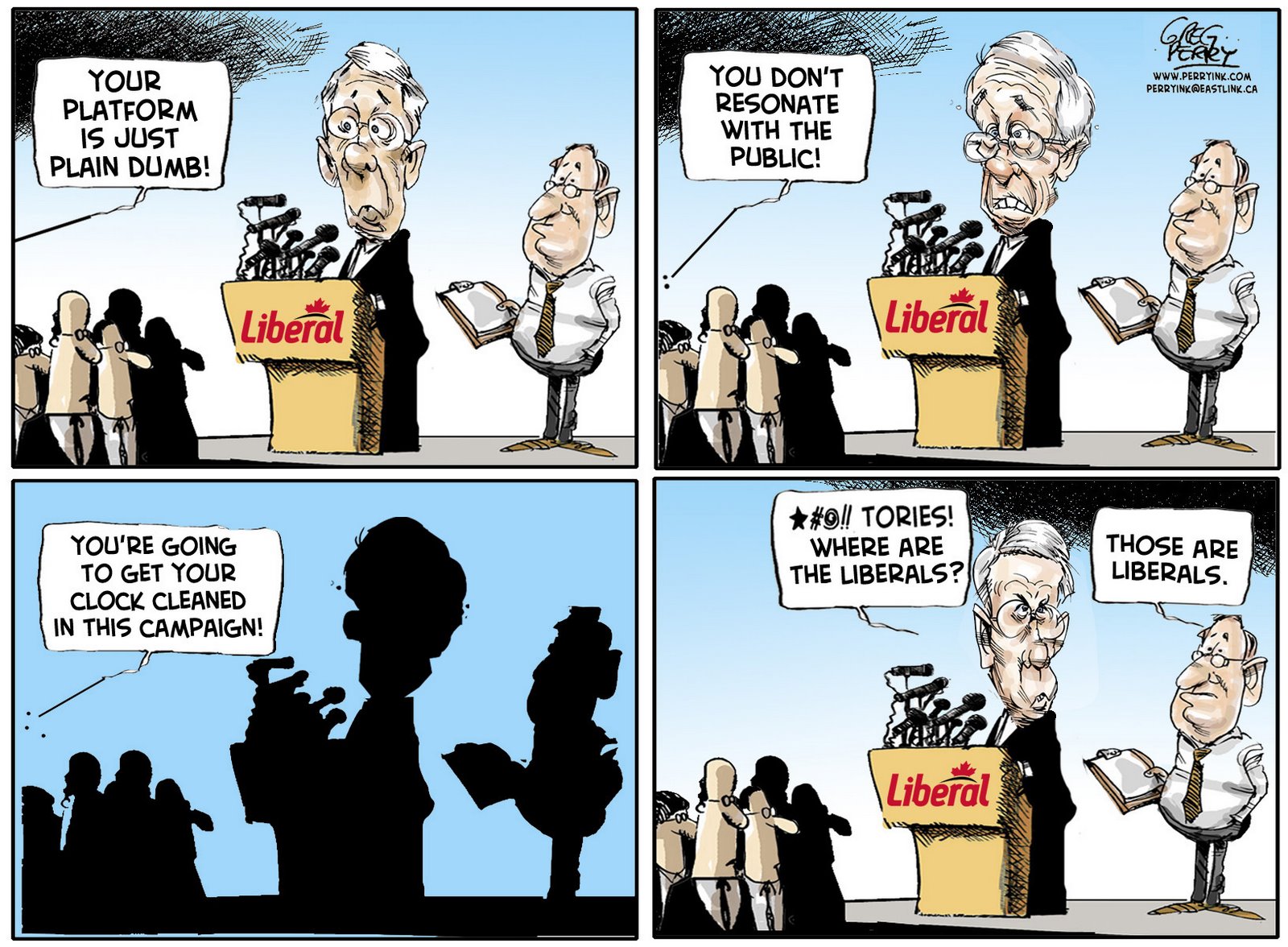
Liberal problems according to Greg Perry.

But the race was close.

The article even has Garneau conceding at one point and stating that " the Liberals were powerless against "the large, cataclysmic tectonic shift" that happened in Canadian politics Monday night."

He might have been right concerning the bigger picture, but as reported by the May 3rd, 2011 Globe and Mail, the final election results for the Westmount-Ville-Marie riding show Garneau elected with 37.2%/ 15,361 votes against NDP candidate Joanne Corbeil with 35.6%/ 14,703 votes, Conservative candidate Neil Drabkin with 17.5%/ 7,216 votes and Bloc Québécois candidate Véronique Roy with 5.5%/ 2,290 votes.

It's good for the space systems industry that Garneau personally was re-elected, no matter what his political affiliation.

Last Wednesday at a Canadian Advanced Technology Association (CATA) teleforum conference call focused on innovation, entrepreneurship and public policy, Garneau even responded to a question on the use of flow-through tax credits to spur growth in the clean energy, resources, health, biosciences, and digital technology sectors by indicating that these sorts of tax credits would also be useful to grow the space systems sector.

The use of flow-through tax credits (originally designed for the mining and resource industry as outlined in my June 20th, 2010 post "Mining as a Model for the Commercial Space Industry") has been discussed off and on among commercial space experts for quite awhile and it's about time for this to finally gain traction in the wider public policy sphere.

Options and policies like this will need to be discussed among the surviving liberal leaders (and Garneau is certainly one of those now) if they ever expect to govern again.
D. Sellah, the new NDP MP for St. Bruno/St. Hubert.

This might even be something for NDP leader Jack Layton to look at since the Canadian Auto Workers, Canada's largest private sector union also represents aerospace employees at Boeing Canada (Local 2169), Bombardier/ de Havilland (Local 112), Cascade Aerospace (Local 114), CMC Electronics, Magellan Aerospace/ Bristol (Local 3005) and Pratt and Whitney Canada (Local 510).

Of course, the overall election results show the Conservative Party under Stephen Harper with 167 seats and a majority government, the New Democratic Party under Jack Layton with 102 seats and official opposition status, the Liberal Party under Michael Ignatieff reduced to a rump of 34 seats and the Bloc Québécois under Gilles Duceppe essentially wiped out as a party with only four seats remaining.
John H Chapman Space Centre, also in St. Hubert.

As a result of the election, it is expected that the new government will move quickly to re-introduce the FY 2011 federal budget, originally tabled in the House of Commons on March 22nd, but not adopted before the dissolution of Parliament on March 26, 2011.

This existing federal budget includes a proposal for a twelve to eighteen month review of the combined "aerospace industry" which will include the Canadian space systems industry and the Canadian Space Agency (CSA) and will also supersede previous reviews as outlined in my March 18th, 2011 post "The Difference Between "Aviation" and "Space"."

In essence, the new review means that the 2008 long term space plan (LTSP), undertaken by CSA President Steve MacLean as part of a mandate from then Industry Minister Jim Prentice in this September 2nd, 2008 speech, is finally and officially dead.

It will be interesting to see what the new conservative majority government comes up with to replace the LTSP. Perhaps the space systems industry should also start lobbying the incoming Harper government about flow-through tax credits.

COMMENTS:

From:  Kieran Carroll

(I'm still unable to get the "Post a Comment" link to work on your blog site)

You wrote:
According to the May 3rd, 2011 Montreal Gazette article "Star Liberal MP Squeezes in," one of the liberal party star candidates and Canada's first man in space, Marc Garneau is slightly leading in his home riding of Westmount-Ville-Marie and has likely won re-election...[according to the] Globe and Mail, the final election results for the Westmount-Ville-Marie riding show Garneau elected with 37.2%/ 15,361 votes against NDP candidate Joanne Corbeil with 35.6%/ 14,703 votes...
The elections Canada's web-site (http://enr.elections.ca/ElectoralDistricts_e.aspx?type=2&criteria=marc%20garneau) generally confirms those preliminary results. It says that Marc Garneau won Westmount-Ville Marie, with 15,346 votes (37.2%), ahead of the NDP candidate who received 14,704.

- Kieran

Editors Note: Send your questions, queries, concerns and comments to mr.chuck.black@gmail.com and I'll make sure they get posted.

Sunday, June 20, 2010

Mining as a Model for the Commercial Space Industry

Eva-Jane Lark, a BMO Nesbitt Burns VP and investment adviser, space advocate and author of EVA Interviews: The Business of the new Space Age™ sent me an e-mail last week referencing a recent interview I did with Elizabeth Howell over on the Pars3c web blog under the title "High Five: Chuck Black, Canadian Space Commerce Association."

In the article, I stated that the original idea of funding space focused Canadian companies though an extension of the tax credits presently provided to the Canadian mining industry came from John Chapman, a retired mining executive and three Macdonald Dettwiler and Associates (MDA) employees who first presented a paper on the topic at the 2008 Canadian Space Summit.

Eva politely mentioned that she has also written about tax credits and the use of flow through shares to fund space focused activities as far back as 2005. Her article “Investment Financing of Exploration to New Worlds” gives some overall context of the issues involved and a paper she presented at the 2006 International Space Development Conference titled Investment Financing of Exploration to New Worlds: Historical Investment Financing of Exploration for New Worlds, Current Analogies to Other Industries, and Ideas for the Future specifically discussed mining industry analogues beginning on page eight.

I think this was her way of reminding me that the idea has a surprisingly broad genesis going back several years in Canada and even possesses US based advocates like Burke Forte, Director of the 8th Continent Project (an organization affiliated with the Colorado School of Mines) and quite a few others.

So what is this idea all about anyway?

To begin with, the modern intersection of mining and space activities goes back to 1972 and a soil sample retrieved by the Apollo 17 astronauts containing helium-3, a lightweight isotope of helium suitable for fueling atomic reactors, at least it does according to "Mining the Moon" an article published in the December 7th, 2004 edition of Popular Mechanics.


According to the article, the "vast stores" of this "nonpolluting nuclear fuel" are the key to our technological future and also a great way to make lots and lots of money once a whole bunch of intermediary technological, financial and market difficulties have successfully been dealt with.

But details are for accountants and not many accountants ever became space advocates so the extraterrestrial mining of exotic resources slowly became one of those things brought up (along with space based solar power and space tourism) when advocates wanted to give unsupported, "pie in the sky" examples of the enormous commercial potential awaiting those brave or foolish enough to invest in the high frontier.


But after awhile, even the mining companies jumped on the bandwagon and began to point out that the same tools used to scrape minerals off the ocean floor or dig deep into the bowels of the Earth are also suitable, with appropriate modifications, for mining pretty much anywhere, even on the Moon or in the asteroids.

Of course, they weren't initially terribly serious about the idea, although it did turn out to be a good way to obtain grants to fund R&D activities and gain publicity with articles like this 2007 Universe Today post "Heavy Construction on the Moon" which promotes Caterpillar Inc. the worlds leading manufacturer of construction and mining equipment.

But over time, mining and resource companies started coming into more direct contact with space based activities through their use of earth imaging satellites and technology to assist with resource location and development activities.

Eventually all this cross-pollination and idea exchanging got the space gurus and the mining geniuses talking about commonalities and several concluded that the industries are quite similar, with both being highly speculative and requiring large amounts of money up-front for a potential return on investment that could take decades to materialize.

But since mining companies often depend on tax credits to fund their activities, they also normally have quite a few accountants on the payroll and some of the brighter accountants started thinking that there was essentially no real reason why space focused companies can't use the same tax credits that mining companies use to raise money, just so long as mining eventually occurs somewhere.

Even if that somewhere eventually ends up being in space.


After all, the costs for deep water mining and resource collection are the same order of magnitude as space focused activities these days. Plus, space based resource collection also has less terrestrial economic and ecological consequences should something break (and pretty much any British Petroleum public relations person should be able to provide some background in that area right now).

I finally came across the idea in 2008 when retired mining executive, John Chapman and several people working for Canadian space focused firm Macdonald Dettwiler and Associates presented a paper on the topic at the 2008 Canadian Space Summit.

According to their abstract (which is available online here):
"Financing of space research, exploration and development in the past has been done mainly by governments. To create a vibrant and sustainable space program, the private sector needs to be aggressively involved, building upon the foundation established mainly by the USA and Soviet Union governments.

There is an analog that could point the way to rapidly opening space to private enterprise - that is the (existing) Canadian flow through tax incentive for mineral exploration. The flow through tax credit program in Canada has facilitated the raising of billions of dollars annually for mineral exploration companies, mainly by wealthy individuals, and this has kept Canada in the forefront of mineral exploration and mine development."
According to the authors, the conquest of space is no longer rocket science. It's all about the tax code and accounting. Raising money is simply a question of extending the tax code provisions already in use by the Canadian mining industry to cover space focused activities.

Of course, this idea has essentially dropped off the face of the Earth since the presentation in 2008, but now might be a good time to revisit it since Canadian Space Agency (CSA) President Steve MacLean recently indicated that Canada needs $2 billion over five years in order to "put us at the table" according to the article "Bill to push Canada in space to top $2B: MacLean" from the PARS3C web blog.

$2 Billion over five years seems like a pretty small amount compared to what the Canadian mining industry can raise. Perhaps the Canadian space industry should take note.

Besides, no one is going to fund anything off the Gulf coast for the next little while and the money might just as well go somewhere useful.

Sunday, May 23, 2010

Feedback on "The Bill to Push Canada's Agenda in Space"

There's been quite a bit of feedback from my May 16th, 2010 post titled "The Bill to Push Canada's Agenda in Space" which focused on the May 11th, 2010 House of Commons Standing Committee on Industry, Science and Technology (INDU) meeting with Canadian Space Agency (CSA) President Steve MacLean, Canadian astronaut Robert Thirsk, Japan Aerospace Exploration Agency (JAXA) astronaut Koichi Wakata and European Space Agency (ESA) astronaut Frank De Winne.

During the meeting, CSA President MacLean stated that the CSA required an additional budget of "2 Billion over five years" to "put us at the table" and drive innovation. He also stated unequivocally that “Everything we do is to align with (Canada’s) science and tech strategy.”

Those of us interested in having a little context to the discussion before wading into the comments and opinions might want to listen to this audio recording of the meeting hosted on the ParlVU website. To listen, you simply click on “Advanced View” and select “English Audio 32K”and your reward is almost two hours of fascinating context on our politicians and our space program which will help to illuminate the discussion below.

As for the rest of us, who might perhaps be too impatient to do the appropriate due-diligence, here are some of the more interesting comments, views and opinions received over the last few days interspersed with some context, some personal opinions and even a list of four things that independent space focused businesses should lobby the government about.

To begin with, Canadian Space Society President Kevin Shortt (who also subscribes to the discuss@spacecommerce.ca e-mail list where I get some of my best ideas), seems to have provided perhaps the most direct and relevant commentary on the discussion by stating:
"The thing that struck me was that everyone (in the meeting) seemed interested in the idea of pursuing exploration of the solar system but lacked the knowledge to ask the intelligent questions on what it would take to accomplish those goals. Then they would turn around and ask questions concerning why so much money is being invested in space technology.

This tells me that while there is an interest to invest in this kind of thing, there is a fundamental lack of understanding in the basic process to get this technology "off the ground" which makes justifying the expense that much more difficult. My feeling is that until there is that fundamental understanding, any programs that involve spending money on space will be short-lived and hard to maintain."
Shortt's comments certainly seem accurate to those of us who have listened to the meeting, but are also confusing to those of us (including Shortt) who are aware of Canada's longstanding science and technology strategy which encourages the commercialization and utilization of newly developed technologies as described in my May 22nd post "The "Three Kings" of Canadian Commercial Space".


This policy has essentially remained unchanged for decades and enjoys a broad consensus of support across the generally partisan, Canadian political party lines. Of course, it is certainly possible that those politicians who were aware of the strategy, like Liberal MP Marc Garneau, either attended the meeting but intentionally kept quite or else managed  to be absent for the discussion.

Some readers focused on good reasons why Canada should continue on with space focused activities whatever the cost. After all, $2 billion extra spread out over five years on top of the existing budget does seem like a lot of money and politicians might want some sort of justification to authorize those expenditures. These justifications could include:
  1. The encouragement of high-tech job creation which will increase exports and grow tax revenue.
  2. The creation and distribution of new technologies and products that will improve the efficiency of industries.
  3. Building international reputation and goodwill to gain access to important places like the International Space Station (ISS) and/or encourage the Americans to maintain their subsidy of Canadian astronaut activities.
  4. The inspiration to youth to study science and technology based subjects which are needed over the long term to do one or more of the items listed above.
  5. How it's in our "essential nature" to "boldly go where no man has gone before."
No doubt the above are valid points, but the first two items need some sort of tracking mechanism which politicians can use to justify their decisions, while the third and the fourth are generally nice to have but only follow logically upon the successful completion of the first two.

After all. kids and foreign politicians generally aren't inspired or interested in giving out goodwill without something useful actually being done that they can see and become excited about.

So what about that final point about our essential nature and going boldly? It sounds great and it's made some people who write fiction quite a bit of money, but as a practical justification of why we should undertake space focused activities it just doesn't seem to have worked so far to convince the skeptics.

Even the great 1960's adventures of the Apollo program only went boldly in order to keep the Russians from getting their first.

So while going boldly often make for a good story, maybe the time has come to find new hero's with different stories to tell. Perhaps we need someone like Delos D. Harriman, an entrepreneurial businessman who masterminded the first landing on the Moon as a private business venture in the 1949 Robert A. Heinlein novel "The Man Who Sold the Moon."

Or maybe that's a topic for another time...

Moving back to today's topic, it's important to note that several readers took me personally to task for my suggestion to move the debate into the political arena and lobby the federal government. One commented said flat out that "since we don't officially know what the LTSP is yet or why it will cost an additional $2 billion over five years, it might be worthwhile for you to suggest some good things to lobby for, rather than just suggesting that we call up the our local MP to say hi."

They're right and an alternative is indeed needed. So here's what I'd personally call up my MP to lobby for:
  1. First of all, I'd ask for the existing LTSP to be formally released, if only because it can't really be discussed unless we know what's in it (although by now we must all have at least a general idea).
  2. Secondly, I'd request the creation of CSA programs specifically targeted towards small business and tech start-ups because there aren't any programs in that area right now and they're needed. I first wrote about this state of affairs back in July 2009 under the title "OK, So Maybe the CSA Does Provide Some Support for Small Aerospace Firms" but was joking in the title, since there were no specific CSA programs whatsoever for small businesses then. Nothing seems to have changed since, so maybe we should suggest more strongly a second time that the CSA develop some small business specific programs for their subcontractors. From a political perspective, I'm pretty confident that the announcement of a small business specific program from the CSA would go far towards building a consensus in favor of the organization getting the extra money needed to fully implement the LTSP.
  3. Thirdly, I'd lobby to make sure that something called "Section 116" of the tax code is removed as promised in the last federal budget (I talked about section 116 in my March 8th, 2010 post "Happy Days Are Here Again"). In  essence, section 116 makes it hard for foreign companies and individuals to invest in Canadian based companies and I'd like Canadian companies to have all the capital they can get.
  4. And finally, I'd advocate that the "super-flow through share" tax credits presently used by the Canadian mining industry to fund speculative mining ventures also be extended to fund science and technology commercialization activities. After all, there is certainly overlap between mining activities and science and technology commercialization since they both are highly speculative and require large amounts of money up front for a potential return on investment that could take decades to materialize. Of course, this is nothing new to readers of this blog since I've previously talked about flow-through tax credits as recently as my post "Preparing for the Next Great Canadian Gold Rush." An abstract on the topic by John Chapman, Nadeem Ghafoor, Christian Sallaberger and Frank Teti from the 2008 Canadian Space Summit is also available online here for those of us who'd like to learn more.
Points three and four are specifically focused on funding through tax credits for space science and R&D, which is quite palatable to politicians right now, if only because there are no requirements for up-front government funded capital investment or ongoing financing. Plus, the returns from the program can be easily measured through the filed tax forms of the program participants.

Taken in total, these four points are proposals that politicians will understand without a lot of education, training or prompting and be able to track without the need to refer to any deeper philosophical arguments.

They are also helpful for companies interested in raising money to do a little science and commercialize some technology for space focused activities and that's why I'd advocate them.

Of course, I'm fully aware that taxation is a blunt instrument for social policy and sometimes leads to unintended consequences as you can infer from the recent May 2010 SR&ED Update on the Canadian Advanced Technology Alliance (CATAAlliance) website, which talks about another Canadian tax credit program and what it's supposed to accomplish:
"Once again, the (SR&ED) program seems to have strayed back to the CRA’s (Canada Revenue Agency) traditions and focus on compliance instead of on the effective delivery of an incentive program.  For whatever reason, the program’s leadership just cannot get it right."
So the ideas aren't perfect but they are a start and we all need to start somewhere.

I'm also fully aware that my four proposals don't really address national security and economic infrastructure issues arising out of the aborted  2008 sale of portions of Canadian space focused  business icon Macdonald Dettwiler (MDA) to American-owned Alliant Techsystems (ATK).

But again, they are a start and we all need to start somewhere. In this case, I'm even willing to publicly go on record as stating that I don't think that the MacLean proposals, as summarized in the as yet unreleased LTSP, will address national security and economic infrastructure issues either.

Anyone looking to prove me wrong is encouraged to release the LTSP and point out the appropriate passages in the document.

Tuesday, November 17, 2009

Preparing for the Next Great Canadian Gold Rush!

Today John Chapman sits at his desk in J A Chapman Mining Services where he provides general engineering and mine economics consulting for a variety of mining companies, but he started out in the field doing exploration, development and operations work for bigger firms including Placer Dome and Manalta Coal (then Canada's largest coal company) where he developed strong technical, managerial and administrative skills and learned how to operate major mining equipment such as loaders, dump trucks, bulldozers, graders and scrapers.

At one point, he even acted as a welder on the Distant Early Warning (DEW) Line high up in the Canadian Arctic.

But all this practical expertise might just make him a bit of an anomaly in his other role as an advocate focused on the commercial development of useful space technologies. This is an area of expertise heavily populated by narrowly focused academics and scientists who often seem more comfortable writing well crafted abstracts for theoretical symposiums than going out in the field and getting their fingernails dirty operating heavy machinery.

Chapman is perhaps a little more modest regarding his capabilities. For example, according to an open letter he wrote to Canadian Space Agency (CSA) President Steve MacLean on October 30th, 2009:
I am a semi-retired mining engineer that for the past nine years has invested in the space industry and at the same time worked to raise the Western Canadian awareness of the importance of space science and technology to Canada and to society in general. I have authored and presented several papers on mineral exploration, mining and finance at space conferences in China, Europe and Canada. In 2008 I was the lead organizer and sponsor of the Return to the Moon event at the BCIT Aerospace Campus in Vancouver that featured Harrison Schmitt, Tom Jones and Robert Richards (see www.bcit.ca/returntothemoon). As the "space champion" on the UBC Thunderbird Robotics Advisory Board I am pleased to report that the Team just returned from placing sixth at the NASA Centennial Challenges, Regolith Excavation Challenge at the Ames Center in California. They used UBC students that were US citizens in order to qualify in the Competition.
Why would someone write an open letter to the CSA President? According to Chapman:
…the reason for me writing this letter is to seek your support in creating a system of prizes for Canadian universities, business and individuals, similar to the NASA Centennial Challenges in the USA. It is my opinion that a Canadian system of prizes will yield greater and faster returns for government and private space investors. 
He quotes from the October 22nd, 2009 issue of the Economist in an article titled “Space Hopper: a prize for a moon lander will be won this month.”
I quote from this week's Economist in the Science and Technology Section, "…provided ample demonstration of the effect, long known in technology-prize circles, that the money and effort invested in winning far exceed the financial value of the prize itself….in the right context, and with right design, prizes can work. Their other advantage is that – in contrast to the fat government contracts on which much of the aerospace industry thrives - the money is handed out only when the goals are achieved. That is a lesson in incentives that governments would do well to remember".
So far there has been no response to the letter by CSA officials but Chapman believes that “someone needs to be the Western Canadian champion” for this sort of activism to train the next generation of mining engineers, experts and space focused entrepreneurs.

He also believes there are lessons to be learned from financing mechanisms used in the mining industry where the high up-front costs, expected long lead times before generating a profit and adverse physical conditions create surprisingly similar financial and technical constraints no matter where the mine happens to be located.

Even if that mine is located on the Moon, states Chapman unequivocally. 

He cites financial tools and tax credits used specifically to build the Canadian mining industry as tools which can also be used to build aerospace and newspace focused Canadian business. One of his suggestions is to expanding the use of something called “super” flow-through shares and related investment tax credits to include space focused investments. He recently co-authored (along with several executives from MacDonald Dettwiler and Associates) the paper titled “Creating a Robust Canadian space research exploration and development industry” which focused on these investment tax credits and was presented at the 2008 Canadian Space Summit.


But both financial and educational processes and procedures need to be in place in order to grow Canadian opportunities and that’s why Chapman always talks about both mining the moon and funding student prizes to teach people the necessary and practical skills needed to do this successfully.

Chapman is on the Advisory Board of The UBC Thunderbird Robotics TEAM TREAD that was recently profiled in the November 2009 issue of Resource World along with a second article titled “Mining on the Moon Revisited” by author Jennifer S. Getsinger. Previous articles in the publication have profiled astronaut Harrison Schmitt and mining helium 3 on the moon (June 2008).

Support our Patreon Page